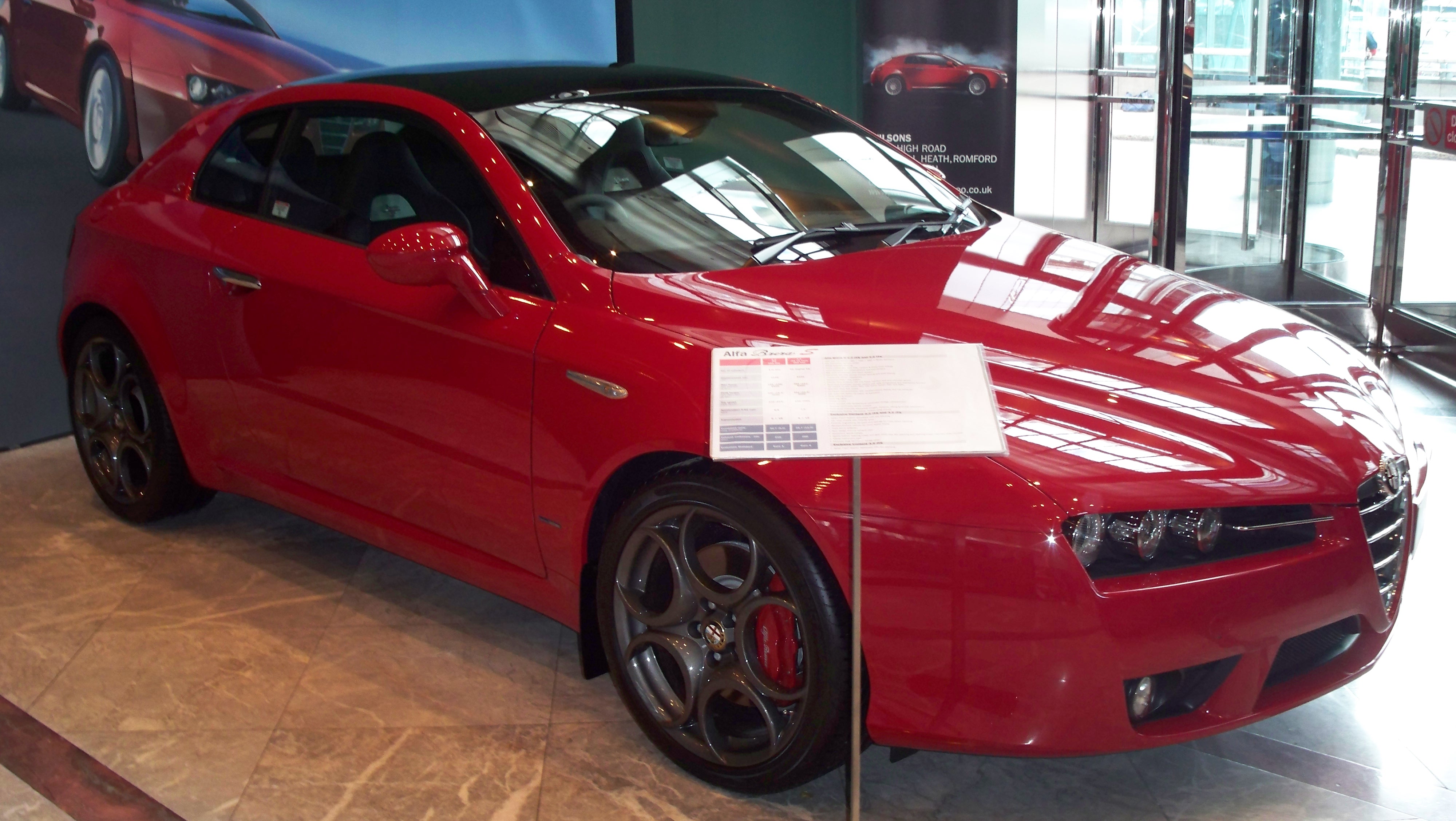
On display on the Alfa Romeo stand in Geneva, two cars show-case the all new Alfa Romeo ‘HF’ V6 engine for the first time publicly.
A product of the recently terminated Fiat-GM Powertrain joint venture, the new 3.2 litre V6 engine is built in Melbourne, Australia, alongside variants for various GM marques, and is supplied to Italy as a complete assembly to be fitted to cars on the production line.
The new V6 engine has been welcomed with mixed emotions by Alfa Romeo enthusiasts, despite the engine not yet having been trialed by the media.
Feedback from members who have driven the new Alfa Romeo 159 and Brera models fitted with the engine have, however, relayed a very positive note, expressing that the cars were characterized with ‘impressive performance and smoothness’. The engine is uniquely different from any of the other variants of the GM V6 engine range, and can be described as a true Alfa Romeo gem, with the majority of components having been redesigned around the bare block.
 Alfa Romeo Brera
 Alfa Romeo Brera
One of the issues closest to the heart of Alfisti will be how this new engine sounds, with the original Arese built V6 playing an almost trademark soundtrack. Alfa Romeo engineers worked day and night with the quest to achieve an engine note worthy of the Alfa Romeo V6 badge, and the presence of a twin tail-pipe exhaust system will certainly complement this nicely.
The so-called Twin Phaser engine uses the second-generation lean burn, direct fuel injection JTS system that was pioneered on the 2.0 litre 4-pot JTS engine in the successful Alfa Romeo 156. Reduced to practical figures, this technical jargon signifies that the new V6 engine will be 40% more economical, and produce 22 Nm more torque than the original Alfa Romeo V6 engine that it is replacing. Power output has now increased to 260 bhp.
 Alfa Romeo Brera
 Alfa Romeo Brera
 Alfa Romeo Brera
 Alfa Romeo Brera
 Alfa Romeo Brera
The new V6 engine has been welcomed with mixed emotions by Alfa Romeo enthusiasts, despite the engine not yet having been trialed by the media.
Feedback from members who have driven the new Alfa Romeo 159 and Brera models fitted with the engine have, however, relayed a very positive note, expressing that the cars were characterized with ‘impressive performance and smoothness’. The engine is uniquely different from any of the other variants of the GM V6 engine range, and can be described as a true Alfa Romeo gem, with the majority of components having been redesigned around the bare block.
As described by the leader behind the technical development centre at Alfa Romeo, Paulo Massai, the block itself can be regarded as an “insensitive and inanimate piece of metal”, with the features that determine the true soul of the engine having been fully engineered from the ground up.
Skepticisms about the GM connotations of this engine should thus be swept under the carpet, as the engine features a brand new cylinder head, new liners, pistons, manifolds and injection system, to name but a few of the changes.


 Alfa Romeo Brera
 Alfa Romeo BreraOne of the issues closest to the heart of Alfisti will be how this new engine sounds, with the original Arese built V6 playing an almost trademark soundtrack. Alfa Romeo engineers worked day and night with the quest to achieve an engine note worthy of the Alfa Romeo V6 badge, and the presence of a twin tail-pipe exhaust system will certainly complement this nicely.
 Alfa Romeo Brera
 Alfa Romeo Brera
 Alfa Romeo Brera
 Alfa Romeo Brera
 Alfa Romeo BreraThe new V6 engine has been welcomed with mixed emotions by Alfa Romeo enthusiasts, despite the engine not yet having been trialed by the media.